Both rejection modes are available for pouch formats that need defective-product removal. Select whole-row rejection when single-pouch precision separation is not required; select precision rejection when good pouches in the same row must be kept.
Maximum values and compatibility depend on the selected configuration, pouch material and production conditions.
Bundle automatic rejection
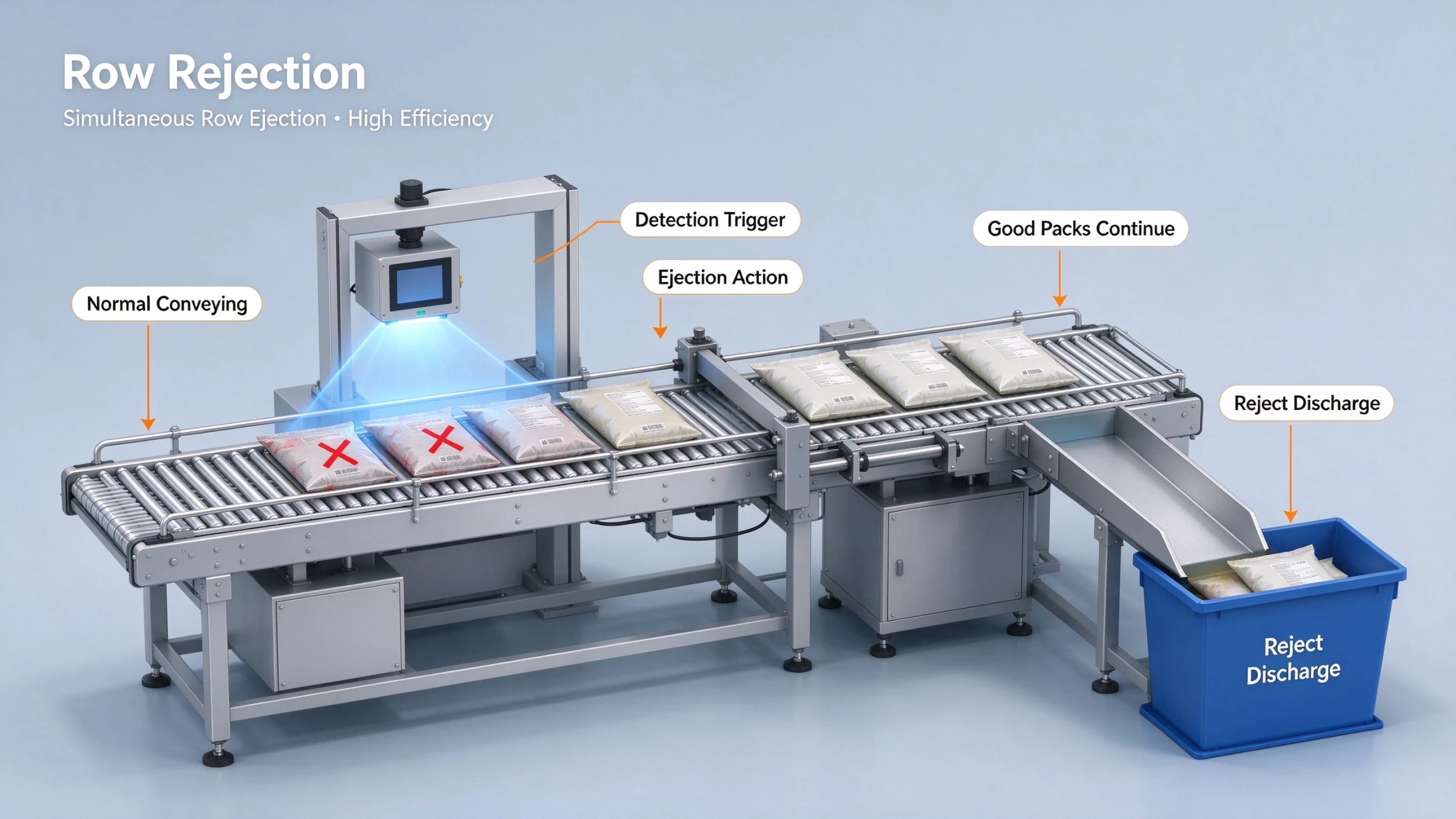
A sideways ejection mechanism pushes the entire affected row into a rejection chute and collection box. Good pouches in that row are rejected too.
Precision Rejection
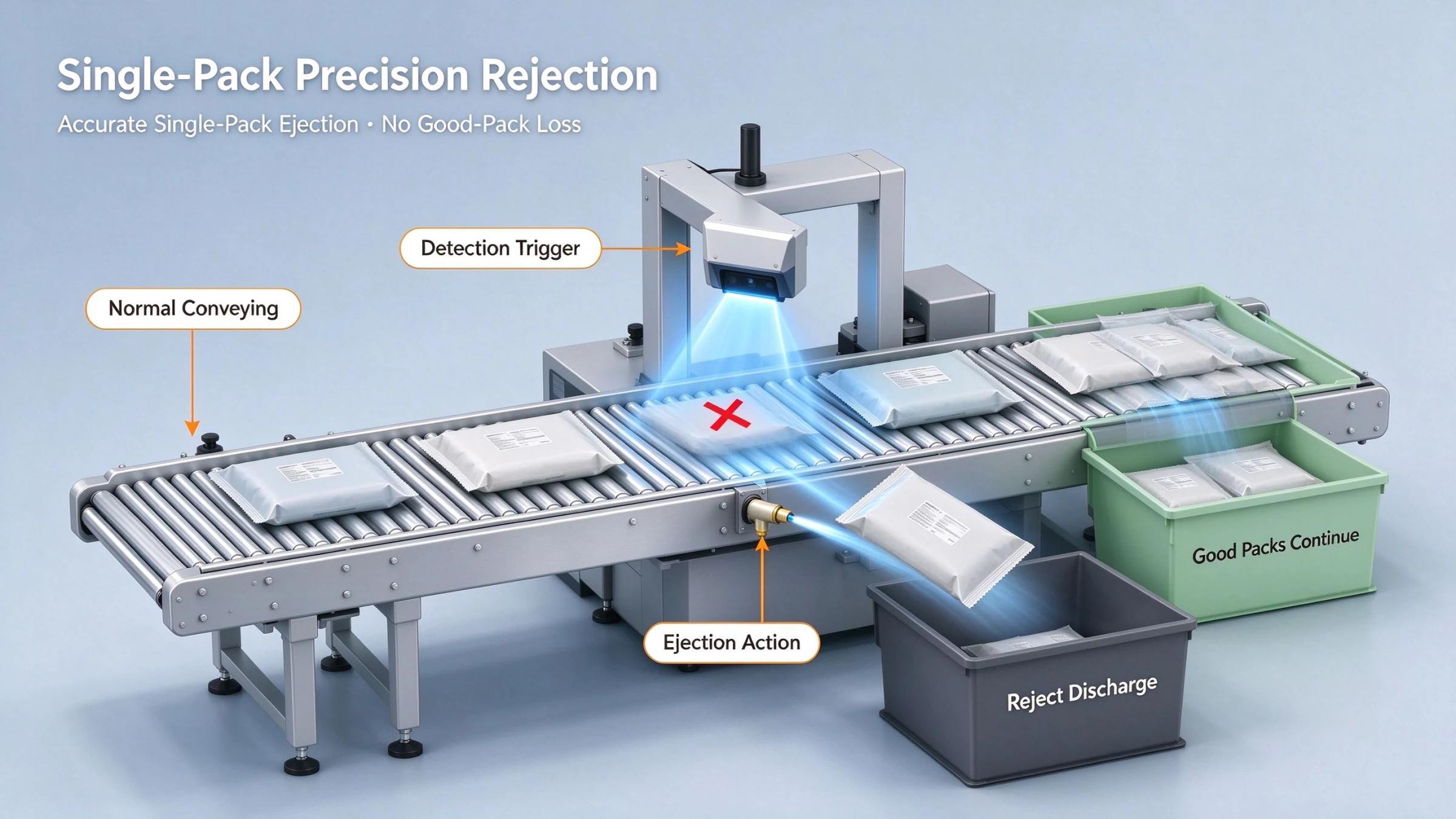
A targeted air jet ejects only the identified defective pouch into the reject collection bin. Good pouches continue into the good-pack collection carton, keeping the two discharge paths separate.
Maximum stated speed
Up to 300 cuts/min for either mode; actual performance depends on the machine and production conditions.
Selection trade-off
Bundle Automatic Rejection uses a simpler, stable mechanism but also discards good pouches sharing a rejected row. Precision Rejection removes only the defective pouch.
How rejection works
Follow the pouch. Understand the discharge.
Two different actions, shown with dedicated principle illustrations and a three-step explanation.
01
Bundle Automatic Rejection / Row rejection
Working principle illustration · click to view full size. Actual equipment layout depends on the selected configuration.
01
Normal conveying
Pouches are continuously fed into the detection area by the conveyor, maintaining a stable production rhythm.
02
Trigger action
When the detection system identifies a non-conforming pouch, the ejection mechanism pushes the entire affected row sideways at the rejection position.
03
Discharge
The rejected row enters the rejection chute and collection box. Pouches in unaffected rows continue forward along the main conveyor.
Selection trade-off: If one pouch in a row is defective, every pouch in that row is rejected, including good pouches. Choose Precision Rejection when those good pouches must be retained.
02
Precision Rejection / Single-pack air ejection
Working principle illustration · click to view full size. Actual equipment layout depends on the selected configuration.
01
Normal conveying
Pouches pass through the detection area one by one at a steady conveying speed.
02
Trigger action
The detection system precisely locates an individual non-conforming pouch. A targeted air jet triggers ejection of that pouch.
03
Segregated discharge
The defective pouch falls separately into the Reject Discharge bin. Good pouches continue without interference into the Good Pack Carton, keeping good and defective products in separate collection areas.
Selection benefit: Only the identified defective pouch is removed; neighbouring good pouches are retained. Final performance is confirmed for the selected machine and production conditions.
Two configurations
The difference is what gets removed.
01 / WHOLE ROW
Bundle Automatic Rejection
For production that requires defective-pouch removal but does not require individual-pouch separation. A complete affected row is pushed sideways into the reject collection box.
02 / SINGLE POUCH
Precision Rejection
For production that requires targeted removal and separate good / reject discharge. Air ejection removes the identified defective pouch while good pouches continue on the main line.
03 / DETECTION LINK
Detection supplies the signal
The connected detection system identifies a non-conforming pouch and triggers the rejection mechanism. Detectable defects depend on the inspection equipment; rejection alone does not provide every type of inspection.
Both modes have a stated maximum of 300 cuts/min. The selected machine, pouch format and operating conditions determine the achievable speed. These are separate configuration choices, not a confirmed switchable dual-mode system.
In detail
Equipment reference. Operation in context.
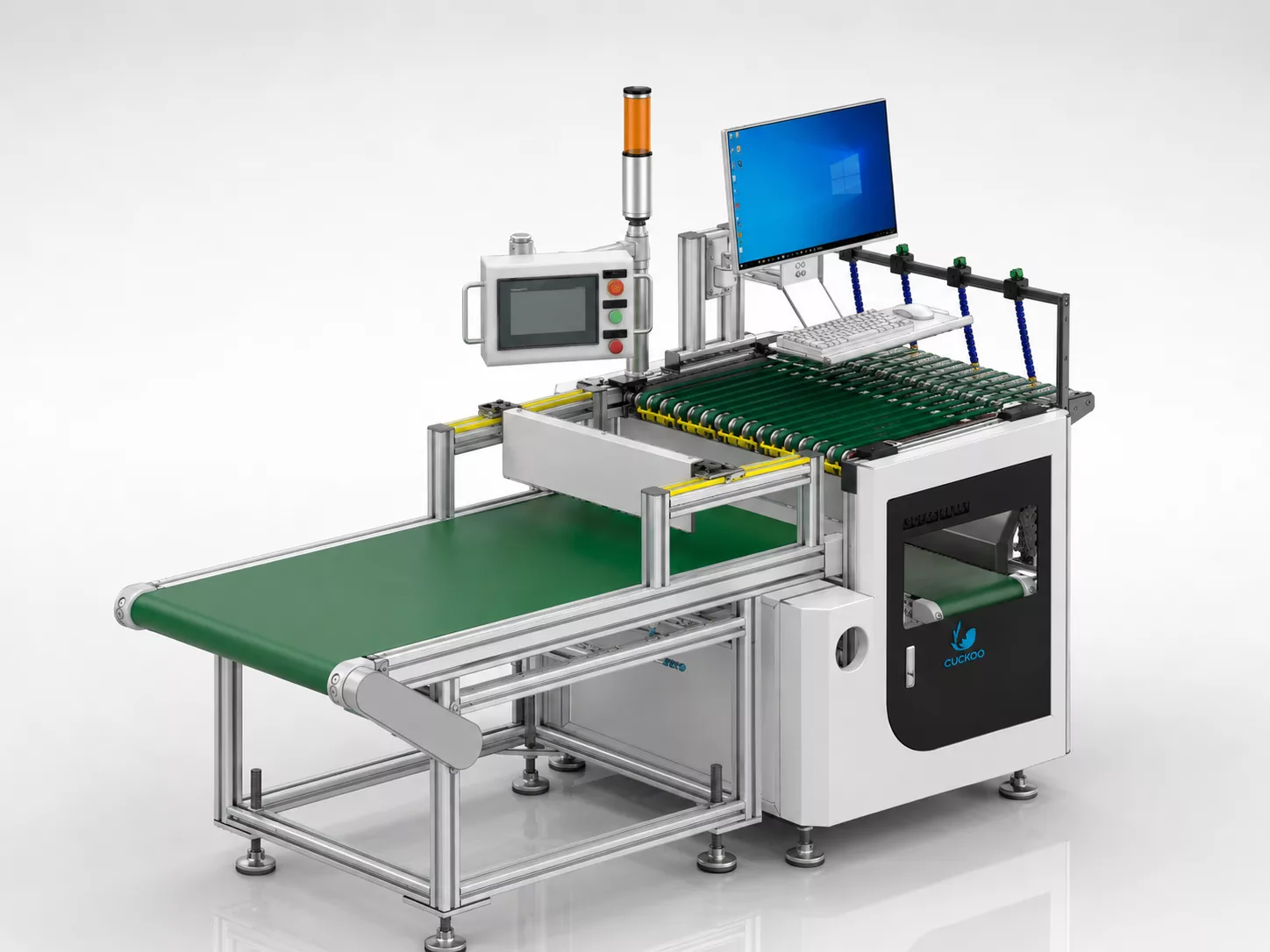
Equipment reference · click to enlarge
Plan the configuration around your line.
The two illustrations above explain the rejection principles. This equipment image and the linked video provide additional reference, not confirmation that every pictured function is included in every model.
Confirm the required detection system, removal mode, pouch format and discharge arrangement before ordering.